Our Founder and Chairman David Read, suggests we may be stuck in a rut with the way we plan menus.
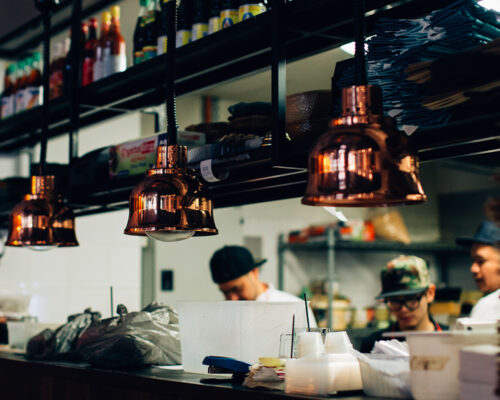
“It’s taken us a while, but we now have a slick process on menu planning and execution – two refreshes a year, that we roll out like a well-oiled machine”. The words of a seasoned and deservedly respected dining operator at a recent meeting.
For some time now the prevailing wisdom in many parts of popular hospitality is that menus should be created in planned cycles to enable the supply chain to be commercially optimised, seasonality to be managed and recipes to be operationally stabilised. Many operators work on quarterly or 6-monthly cycles with chefs using diner consumption data to help inform menu refreshes.
It’s been the prevailing wisdom with good reason. A managed process optimises ingredient ranges, stabilises supply chain, creates predictable and efficient commercials, and delivers more reliable quality and operational performance.
And of course, the arrival of legislation on food standards (such as for allergens) has underlined the criticality of managing and controlling ingredients, their sources and their specifications. In 2025 we are even counting calories for each dish, and measuring carbon impact to help us reach our environmental goals.
Never before has there been so much pressure to rationalise and control each and every element of what is put on a diner’s plate. But in spite of this I have come to believe that for many businesses we have conceded too much by homogenising our own menus to be in line with our supply chains. It is flexibility, creativity and speed of change that can have the largest impact on bottom line when it comes to menu planning, and our procurement leaders and our suppliers would do well to think more widely about the commerciality of supply into hospitality. Let me explain why.
- We’ve cancelled seasonality, and we pay for it
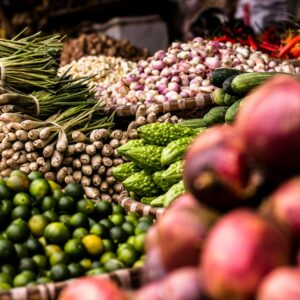
In just a few decades improvements in transport, technology, and distribution have eliminated natural seasonality to the point that eating produce in its natural season is actually quite hard to do. Recent BBC research showed that less than 10% of people knew when some of the most popular fruits were in season. Try walking into any healthy salad bar chain and you will see cherry tomatoes on offer 365 days of the year.
But as buyers we know that a food in season costs less than it does during the rest of the year, and not only tastes better, but will be more nutritious. Instead, we thoughtlessly place out of season product onto our menus, pay more for it, and give an inferior product to our diners.
- Our food supply system is built for retail not hospitality
The world of food production is dominated by the big supermarkets – a place where, for example, asparagus is available year-round. The British asparagus season runs from St George’s day on the 23rd April through to Summer Solstice on the 21st June. That’s just eight and a half weeks before we rely again on flying product in from far-flung places like Peru and Mexico. This imported asparagus lacks the intense flavour of the UK product, is environmentally damaging and is more expensive – yet we continue put it on our menus.
Since the 1960’s our population has increasingly turned to supermarkets for their food, such that today over 90% of food sold for home consumption flows through eight supermarket groups. This has given their buying teams the power to dictate what farmers produce and what they are willing to pay for it, which often bears little relation to the cost of production. They also have the power (and exercise it widely) to make production and shelf-life decisions to prioritise yield over flavour.
Our supermarkets are driven by hitting a competitive price point, maximising shelf life, and making everything they sell the same, all propped up by sweetheart relationships with the large processors/manufacturers.
This approach spins off into our own supply chains in hospitality, where our suppliers live in the ‘huge-scale’ shadow of the supermarkets. So, we end up falling into the same tight ranges, unseasonal product and poor flavour as they do. For example, there are over 7000 eating apple varieties, yet only around 10 are commonly available within hospitality’s supply chains. We buy the cheapest citrus, with low juice yield and poor flavour, and shun larger (say) Sicilian product because it costs more per unit.
- We don’t compete on flavour and nutrition
Such is the homogenous nature of our supply chain within hospitality, we find it challenging to compete on either flavour or nutritional value.
It seems to me that we have developed an over-reliance on recipe to deliver better flavour for our diners. But ask any Michelin starred chef what makes their food taste so great they will always tell you first about the care with which they source their ingredients, and their seasonality.
What is worth noting is that farmers are much happier growing products that taste amazing rather than what we have been asking them to do. We are trapped in a sub-standard system that has forgotten about flavour – and in our position facing the consumer we have the power to use flavour as true differentiator.
Unlike the supermarkets, in hospitality we are not constrained on our choice and flexibility of ingredients. It’s within our power to flex our menus to accommodate seasonality, find new flavours, and give our diners the very best flavour and nutrition, all at a lower cost.
By changing the record on the menu planning cycle many businesses can make an immediate impact on diner delight and margin. The challenge is to do this without compromising the benefits already delivered by rationalisation and standardisation. I have seen this delivered. It requires chef involvement and education, more sophisticated and knowledgeable procurement skills, deep support from the right suppliers, and a strategy that puts flavour and nutrition as a differentiator front and centre.