David Read, Founder and Chairman of Prestige reflects on the likely impact upon food and drink consumption of the surge in use of weight loss drugs
Since 2017, when they were first licenced in the US, the adoption of GLP-1 drugs like Ozempic and Mounjaro for weight loss (or diabetes) treatment has rocketed. In 2024 approximately 12% of American adults (or about 1 in 8) have used them. In Britain, a recent survey indicated that there are now over 0.5 million users.
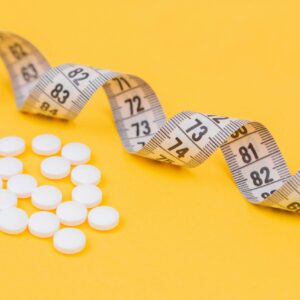
There are many different weight loss injections/oral tablets, but they all tend to have a similar mechanism of action. They work by mimicking natural gut hormones (GLP-1) which help control appetite, hunger, and feelings of fullness. This reduces food cravings inevitably leading to weight loss. Mounjaro (tirzepatide) is a typical example of this type of drug. In a 36-week clinical trial of Mounjaro involving 783 patients across four countries an average weight loss of over 20% of their body weight was observed.
If you are a hospitality operator, you could be forgiven for thinking that the body-weight of our diners should have little impact upon demand. But one has only to listen to the feedback from users to realise that the opposite will be the case. Take these excerpts from a recent Observer article written by Joel Golby after he began using Mounjaro.
“That’s what has struck me about these drugs becoming readily available and then, almost instantly, widely used: how casual it all is”
“The next day at lunch I bite into a char siu bagel and suddenly it feels different in my mouth: like functional food, fuel. At the cinema I eat a hot-dog and it tastes like texture. I still make food purchases based on my old appetite – a bag of those good supermarket cookies stays on the kitchen counter for days, and when has that ever happened? – and I sit in front of a basket of chicken tenders and just look at them, for minutes, before bothering to eat.”
“The complete absence of appetite is what’s so strange, though: after a couple of days it just evaporates, walks out of the room, and now it just isn’t there any more. I keep losing track of my mood in the middle of the afternoon. I keep becoming hangry without the “h”, because I haven’t noticed my own hunger. I have to learn to eat with my brain, instead of my body; to force myself to start my day with a bowl of porridge and a banana, so I have enough fuel to think beyond coffee.”
Far from there being limited impacts upon user’s dietary behaviour, the outcomes are often highly significant and particularly for businesses serving food out of home. Users often eat smaller portions as they feel full more quickly. Cravings for high-fat/high-sugar processed foods reduce. Meal frequency reduces for many users. Some users report lower tolerance to alcohol. Nutrient dense foods are suddenly very important to the user, and may need supplementation.
Currently, these drugs are only available on NHS prescription for those with a BMI of 35 kg/m² or more, or a BMI between 27-30 kg/m² with weight-related health problems like prediabetes, high blood pressure, high cholesterol, or heart problems. The majority of users buy the drugs privately online at a cost of £100-£150 per month. The arguments for a loosening of the NHS rules on eligibility are arguably quite strong, with the cost of obesity to the NHS running currently at c£6.5 billion per annum. And as scale rises and production costs fall the price of GLP-1 drugs within the private market will fall to a more affordable range. It’s not hard to imagine the user community expanding to over 5m within the next few years. At this level (7% of the population) it will impact every hospitality business.
A recent survey conducted by EY in the US showed that GLP-1 drug use results in a measurable shift in users’ consumption behaviour, with an especially large impact on several snack food categories. For example, survey respondents using GLP-1 drugs for weight loss reported “a sharp shift in their consumption from snack foods to healthy options such as proteins and fresh fruits and vegetables. Respondents claimed their consumption of foods across different snack categories dropped by between 40% and 60%, while their consumption of specialty and health foods climbed by nearly 50%. Proteins increased even more, by 65%, and fruits and vegetables by nearly 80%, users said.”
A similar study by J.P. Morgan Research has found that current GLP-1 users “purchased around 8% less food — including snacks, soft drinks and high-carb products for at-home consumption over the last 12 months compared with the average consumer.” It suggested that food intake could decrease by -3% in North America by 2030, though this figure could be much higher for packaged foods.
What is already clear is that nutrient density of menu items will become a critical selection factor for users of these weight-loss drugs. Faced with the reality of needing to remember to eat properly because hunger levels don’t prompt eating normally, the implications for marketing teams throughout our sector are profound.
If all this sounds like a further awful development in an already dystopian food system, then I completely agree. We have built a food system that creates poorer nutrition and damages the environment by the use of man-made chemical interventions. It seems ironic that we are now turning to yet more chemicals to undo the damage we are doing to our own bodies. But Henry Dimbleby in his seminal book Ravenous sets the arguments out differently “If governments won’t intervene to improve our food system, pharmaceuticals may be our best option. It seems to me that we face a choice between two types of intervention: public or private. We can try to improve our food environment for everyone, through legislation and financial incentives. Or we can leave it to individuals to hack their own biology, with the help of modern medicine.”
Either way, there is certainty that by 2030 we will see a materially different customer landscape as a result of these drugs. Change always presents both risk and opportunity. We will need to move quickly to understand the implications for our businesses as this next wave of change comes rolling in.